

Project Description
Long Head Biceps (LHB) Pain
Long Head Biceps (LHB) Pain
What is Long Head Biceps (LHB) Pain?
The long head of biceps tendon is a well-recognised source of shoulder pain. In cases of overuse, which is the most common cause of shoulder pain, the long head of biceps tendon may become inflamed, swollen, and painful. In more serious cases the tendon can fray and eventually tear. A tendon can also tear due to an acute injury, such as lifting a heavy object, moving or twisting your arm or shoulder in an awkward way or falling with your arm outstretched.
Long head of biceps tendon pain is the umbrella term for biceps injuries that include:
- Biceps tendonitis – when the tendon becomes inflamed.
- Biceps tenosynovitis – when the tendon sheath becomes inflamed
- Biceps tendon subluxation/dislocation – when the tendon slips out of the biceps grove.
- Ruptured long head of biceps tendon – when the tendon detaches from the bone.
Anatomy of The Biceps Muscle
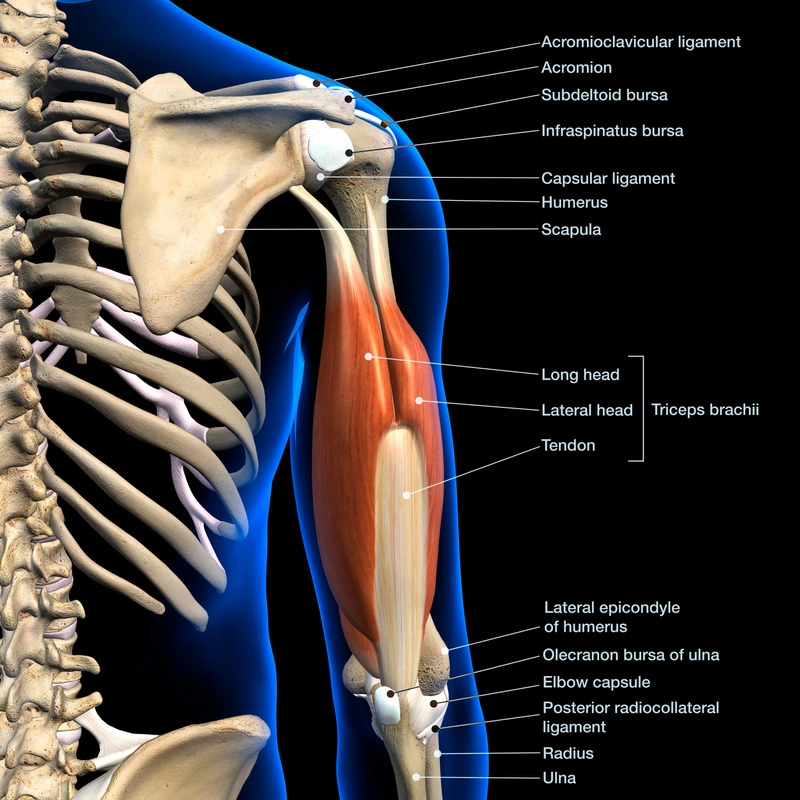
The biceps muscle is located at the front of your upper arm. It helps you bend (flex) your elbow as well as rotate your forearm (supinate I.e., turn your palm upwards) and lift your upper arm forwards at the shoulder. The long head of bicep tendon sits within a groove in the upper arm, called the bicipital groove, and is encapsulated within a tendon sheath (a layer of tissue around the tendon).
Tendons attach muscles to bones. Two tendons attach the biceps muscle to the shoulder: the ‘long’ head and the ‘short’ head; and there is also one tendon that attaches the biceps muscle to the radius bone at the elbow.
The LHB tendon is unusual, in that it travels up the bicipital groove, enters the shoulder joint over the humeral head (ball of the shoulder) and attaches to the top of the glenoid (shoulder socket). It is the only tendon that runs inside a joint. The LHB tendon attaches to the shoulder socket (a fixed point) inside the shoulder joint but runs in a groove in the ball of the shoulder, it moves with the ball as the arm moves through its wide range of movement. This can place significant stress and strain on the tendon and its attachment on the socket and over time can lead to LHB tendon problems.
The short head of bicep tendon attaches to a bony prominence called the coracoid process on the front of the shoulder. This part of the bicep muscle is very rarely injured and is, therefore, not discussed in this article.
What are the problems associated with LHB?
- Tendonitis – Tendon swelling and inflammation can cause pain at the front of the shoulder. Often, people with biceps tendonitis complain of pain at the shoulder moving to the front of the arm. It can also cause significant pain at night.
- Tenosynovitis – The tendon sheath I.e., the membrane or protective covering around the tendon, itself is vulnerable to inflammation. Tenosynovitis is a term describing the inflammation of the synovial membrane surrounding the tendon. The synovial membrane is part of a fluid filled sheath that surrounds the tendon. This can be very painful and cause significant restriction in movement.
- Tear/rupture – The tendon can be torn off entirely from its attachment at the shoulder. The tendon retracts back into the arm, causing a bulge in the biceps (see image below) The tendon can also partially tear. This does not cause a retraction of the muscle.
Biceps Tendon Rupture
- Bulge in biceps = ‘Popeye’ sign
- Bicep tears are classified as grades 1 – 3 depending upon severity of the injury.
Types of bicep tears:
Grade 1 – minor strain injury that involves overstretching the biceps muscle or tendon, typically without a loss of strength or mobility.
Grade 2 – causes moderate tearing in the biceps or tendon with some loss of mobility or strength.
Grade 3 – a complete rupture of the biceps muscle or tendon, may require surgery to repair.
- Biceps tendon subluxation/dislocation – This is a common condition associated with rotator cuff tendinopathy and tears, as these tendons help to stabilise the LHB within the bicipital groove. The tendon may slip out of the bicipital groove. When the tendon is unstable, it is called LHB subluxation; when the tendon snaps out of the groove and remains outside of the dedicated groove, it is called a LHB dislocation.
What are the causes of LBH problems?
LHB tendon conditions are generally associated with rotator cuff disease or tears, but they can occur in isolation. An isolated LHB issue, usually occur in younger individuals as a result of a traumatic fall on an outstretched arm, a sporting injury, weightlifting or lifting a heavy object.
There are a variety of causes including:
- Constant Overuse – Activities or sports requiring repetitive overhead movement of the arms such as tennis and weight lifting. This will likely initially cause tendonitis, which, over time can also result in a tear and/or tendinopathy
- Acute injury – If you fall hard on an outstretched arm or lift something too heavy, you can tear your LHB tendon.
- Muscle imbalance – Weakness in the rotator cuff or upper back muscles can cause an added strain on the LHB tendon, causing pain and reduction in movement
- Poor postures – Sitting for a long period of time with no breaks and/or adopting a poor posture such as a slumped and forward rotated posture can alter how the arm moves within the shoulder joint, causing increased strain on the tendon.
Risk Factors:
- Age – LHB tendon problems mainly occur in individuals over 40. With increasing age, tendons become stiffer and less elastic and there is also a reduction in blood supply, all of which puts an individual at greater risk for tendinous injuries.
- Sports – this condition is quite common in swimmers, cross fit athletes, tennis players, gymnasts, and weightlifters. Also sports such as rugby, skiing/snowboarding, cycling where falls are more likely.
- Occupation – people in jobs like window cleaners, painters and decorators, carpenters and electricians are at higher risk
- Inflammatory conditions – some medical conditions like lupus and joint arthritis such as rheumatoid arthritis have been associated with tendon problems.
- Previous shoulder pathology/injury – LHB pain is often associated with other shoulder conditions such as frozen shoulder (adhesive capsulitis) and rotator cuff tears and tendinopathy.
What are the symptoms of LHB pain?
Most problems with the LHB tendon present with pain at the front of the shoulder, which can refer to the front of the elbow in the biceps muscle. It can also cause diffuse pain on the outside of the arm and into the elbow. Certain movements of the shoulder will exacerbate the pain, especially movements above shoulder level. In addition, ‘clicking’ or ‘snapping’ of the shoulder can occur, especially with LHB subluxations or dislocations.
Other symptoms can include:
- Inability to move or rotate your arm, reaching above or behind your head or behind your back
- Feeling of weakness in the arm
- Pain further down your arm towards your elbow and sometimes into your chest or neck.
- Deformity – with a complete LHB tendon rupture, the shape of the muscle may change – this is commonly referred to as a ‘Popeye’ sign (refer to earlier image)
- Shoulder stiffness – especially first thing in the morning
- Bruising or swelling on the upper arm particularly if you have torn your tendon.
- Night pain – this is often worse if you lie on your affected side
- Tenderness to touch on the front of the shoulder
Interestingly doing a bicep curl is normally pain-free because this exercise works the tendon at the elbow, not the shoulder
The crossover of symptoms with subacromial bursitis, rotator cuff pathology, frozen shoulder (adhesive capsulitis) other shoulder conditions are very common and so it can be difficult to separate clinically. You will require a thorough assessment to establish what is causing your pain.
If you are suffering from any of the symptoms described, or are concerned that your pain is not improving, and would like to see one of our expert physiotherapists you can call 0207 482 3875 or email info@complete-physio.co.uk. If you would like to speak to a specialist before booking, then please send us an email with your details and we will call you back.
How is a LHB problem diagnosed?
Accurately diagnosing the cause of your shoulder pain is a complex procedure, as there are other conditions affecting your shoulder that may cause similar symptoms. At Complete Physio we have a team of highly skilled physiotherapists who can correctly diagnose your condition and allow for a rapid and effective, personalised treatment approach.
An Assessment at Complete Physio starts with a detailed clinical interview, used to understand your symptoms, and identify possible causes and risk factors.
After your consultation, your physio will perform a physical examination and several clinical tests to help develop a diagnosis; this may include:
- Postural assessment of your shoulder joint, shoulder blade and spine.
- Shoulder range of movement tests
- Clinical tests – a series of specific tests designed to assess the LHB tendon and rotator cuff muscles will likely be performed
- Palpation – Gently, but skilfully, feeling around your shoulder joint, muscles, and tendons to locate the exact source of your pain
- Functional tests – if your pain is present during a specific activity or task, you may be asked to perform these, so the physiotherapist can assess exactly what is aggravating your pain.
This clinical assessment may provoke your symptoms for a short period however, it helps the clinician understand your situation better.
Diagnostic Ultrasound
While a subjective and clinical assessment is important, due to the lack of specificity of the clinical tests and the fact that there are often other underlying pathologies contributing to symptoms, the use of diagnostic musculoskeletal ultrasound can be useful for gaining a definitive diagnosis.
Diagnostic ultrasound can differentiate all types of long head of biceps issues including tendinopathy, a tear, tenosynovitis, subluxation/dislocation, and rupture.
Ultrasound is a cost effective, and highly accurate, diagnostic test and has the same accuracy as an MRI scan. An MRI scan is not necessary to accurately diagnose most shoulder problems including LHB issues. During your diagnostic ultrasound scan, your clinician will ask you to move your arm, to assess what is happening as your shoulder moves through the painful region. This can provide essential information to ensure we obtain the correct diagnosis.
At Complete Physio our ‘Clinical Specialists’ carry out an ultrasound scan as part of their clinical assessment. The combination of the physical examination and ultrasound will help determine the provision of an evidence-based treatment program to relieve your symptoms and allow you to return to the activities you enjoy.
We do not charge extra for an ultrasound scan, and you do not require a GP referral. If you would like to book a physiotherapy appointment, including an ultrasound scan, please ensure you inform our administration team as you will need to book with one of our Clinical Specialists.
If you would like to discuss your shoulder pain before booking or are not sure whether you should have a scan, please call 020 7482 3875 or email info@complete-physio.co.uk and one of our specialists will contact you to discuss.
MRI and Xray
An MRI visualises the deeper structures in the joint better than ultrasound, such as the articular cartilage on the humerus i.e., the “ball” of the “ball and socket”. It also visualises the labrum, which is the cartilage attached to the “socket” of the joint, known as the glenoid labrum.
An X-ray is of little diagnostic value when LHB pathology is suspected as it does not show soft tissue structures, however, it may be appropriate if needing to rule out other pathologies, such as fractures, arthritis, or bone spurs.
How is LHB tendon pain treated?
In most cases, nonsurgical treatments will relieve the symptoms associated with LHB pain, even when the LHB tendon is torn. There are several treatment options for LHB problems, and the best option is different for every person.
The optimal management for long head of biceps tendon complaints depends on several factors, these include:
- Specific diagnosis
- Your age
- Your general health
- Your activity level and goals
- Previous shoulder complaints
Physiotherapy
Recent studies have suggested that patients opting for physiotherapy have demonstrated high satisfaction, an improvement in function, and success in avoiding surgery.
The main goals of physiotherapy are:
- Reducing pain
- Restoring range of motion of the arm and neck.
- Regaining proper scapulothoracic rhythm – this is the relationship between the movement of the arm at the shoulder, and the shoulder blade.
- Restoring full arm and upper body strength.
- Returning to sport/work/normal daily activities.
Your physiotherapist at Complete will discuss your goals, time frames and training schedules to optimise your recovery. They will provide you with an individual, tailored regime based on your personal profile.
This will often include:
- Education and advice – one of the most important and effective aspects of rehabilitation is to understand more about the problem and the best ways to facilitate and take part in your own recovery. You will be given a clear explanation of the diagnosis and any other underlying causes, and we will discuss what is required to address these issues and reach your goals.
- Activity modification – relative rest, changing activity levels, posture re-education, and ergonomic advice to help allow your pain and symptoms to settle. painful activities such as overhead movements should be avoided in the early stages of recovery as it can exacerbate symptoms.
- Manual therapy – including joint mobilisations or manipulations, and soft tissue techniques such as massage. Acupuncture and dry needling can also be beneficial during the early phases of treatment.
- Corrective physiotherapy tape – the application of tape can be used to help correct shoulder position and allow a reduction in pain during movement. It can also help to correct posture and scapulohumeral rhythm.
- Range of movement exercises – for your shoulder, elbow, and neck.
- Specific strengthening programme – consisting of exercises to specifically target the scapular stabilisers, rotator cuff muscles and biceps tendon. This part of your treatment will be very closely monitored to ensure that you are not causing any further damage to the injured tendons and muscles.
- Targeted stretching and manipulation – for any tight muscles.
- Upper limb proprioception exercises – this can help to reduce reinjury and restore high level function. It will also help ensure correct scapulohumeral rhythm is restored.
- Functional and high level, sports, or activity/work specific exercises – this part of your rehab will ensure that you regain your preinjury strength, power, and endurance. It will also help ensure that your injury doesn’t reoccur.
Often there is no one single treatment for LHB pain/pathology, and your therapist will likely work through a varied programme involving some ‘hands on’ therapy and some specific exercises for you to do independently.
Throughout your treatment at Complete Physio, we will keep revisiting your personal goals and activities, so that we maintain the focus on making your life easier and ensuring that you feel supported and involved in your rehab process.
If your LHB tendon pain does not subside there are a few further options available to you to help reduce your pain and get you back to full function.
Ultrasound guided corticosteroid injection
If you have been diagnosed with a long head of biceps issue and the pain is not improving, and particularly if the pain is waking you up at night, then you should consider an ultrasound guided injection.
Steroid (also known as corticosteroid) is a strong anti-inflammatory medication, commonly used in sports medicine. The role of a steroid injection is to reduce your pain to allow you to engage in a rehabilitation programme which strengthens the shoulder muscles and enables you to achieve full function. The injection provides a ‘window of opportunity’ to carry out your physiotherapy exercises with less /no pain. It can also have a significant effect on night pain and
The injection reduces the swelling in and/or around the tendon as is appropriate for tendinopathy, tenosynovitis, and some partial tears. It is not appropriate for the treatment of a long head of biceps rupture.
Generally, we target the biceps tendon sheath containing the long head of the biceps. The needle is placed carefully in the sheath using ultrasound guidance. Evidence suggests that injecting the biceps tendon sheath with ultrasound guidance improves accuracy and effectiveness: also, side effects are reduced.
No injection should be considered as a standalone treatment.
Research has shown significantly better outcomes when injection therapy is combined with physiotherapy rehabilitation and therefore, Complete highly recommend you start a course of physiotherapy within 2 weeks after receiving an injection.
If you would like more information about injection therapy for your shoulder pain or would like to book an appointment, please contact us on 0207 4823875 or email info@complete-physio.co.uk
When might surgery be appropriate?
Non-surgical treatment is usually sufficient in most cases for proximal LHB tendon problems and they have very optimal outcomes. However, in some circumstances, if there is a complete tear in the tendon, or if the tendon is dislocated, or if your symptoms are not responding to conservative management, then there may be a need to operate.
Younger patients and female patients who are unwilling to accept cosmetic (pop-eye) deformity from a complete tear, or athletic patients with an acute isolated tear, who want to return to high level performance sport, may opt for surgical intervention. The presence of associated rotator cuff pathology can also influence surgical management.
There are two main surgical options for dealing with the biceps tendon:
- Biceps tenotomy – the long head of biceps is cut at its origin and allowed to retract out of the shoulder joint into its groove
- Biceps tenodesis – the long head of biceps is cut as above, but the tendon is re-fixed to bone lower down the humerus. This fixation can be done using either keyhole technique or a mini open procedure.
If your physiotherapist feels that you need surgery, then they will refer you on to the most appropriate orthopaedic specialist. At Complete physio we work with some of the most highly regarded and experienced surgeons in the country.
A physiotherapy guided rehabilitation programme will be needed following surgery to restore the full range of movement to your shoulder.
Your post-operative biceps repair recovery commonly takes between six to twelve months.
At Complete Physio we provide a comprehensive, ‘one stop clinic’ for LHB pain, from diagnosis to treatment, including ultrasound guided injections. All these treatments can be carried out within our London clinics, which means you don’t need to visit different specialists. This multidisciplinary approach also makes your treatment more affordable and accessible. If you would like to discuss your treatment before booking in, please do not hesitate to contact us, and one of our expert physiotherapists will call you back.
To make an appointment please email info@complete-physio.co.uk or call 020 7482 3875.
Meet our Clinicians

Chartered Physiotherapist
Alastair graduated in 2003 from the University of East London, and completed many years working in the NHS as a highly specialised musculoskeletal physiotherapist. Additionally, he developed his Physiotherapy knowledge by completing an MSc in Sports…

Chartered Physiotherapist
Alexei graduated with a BSc Hons degree in Physiotherapy from the University of East London in 2003. His particular interest in physiotherapy began primarily in Orthopaedics where he initially developed his career working..

Chartered Physiotherapist
Michael has gained a vast about of experience in assessing and managing a wide variety of musculo-skeletal conditions whilst working at large teaching hospitals in Essex and London.

Specialist Musculoskeletal Physiotherapist
Mike graduated from the University of Nottingham. After specialising within the NHS he worked for a Professional Rugby club honing his hands on skills and analytical ability….


Chartered Physiotherapist
Alex qualified from the University of Hertfordshire in 2005 and has worked in a wide range of settings as a specialist musculoskeletal physiotherapist. He was a spinal clinical specialist…

Specialist Musculoskeletal Physiotherapist
Yasmin is a specialist musculoskeletal physiotherapist who graduated with a 1st class honours degree from Manchester Metropolitan University.