Shockwave Therapy
What is shockwave therapy?
Shockwave therapy or extracorporeal shockwave therapy (ESWT) is an innovative, cost-effective, evidence-based treatment for tendon pain (often known as tendinitis or tendinopathy) and other conditions throughout the body. Extracorporeal means outside of the body.
The main benefits of shockwave are pain relief and restoration of function. Shockwave therapy has been shown to be an effective treatment modality for a range of common tendon complaints including plantar fasciitis, Achilles tendinopathy and tennis elbow.
Shockwave therapy is a safe, non-invasive treatment with convincing evidence for its effectiveness from a large body of research and clinical trials. There are now multiple, randomised, double-blinded clinical trials that support the use of shockwave therapy for plantar fasciitis, lateral epicondylitis, and calcific tendinitis of the shoulder.
What is shockwave therapy used for?
Shockwave therapy is an effective treatment modality for a variety of lower and upper limb conditions. These include:
- Bone injuries - Shin splints (MTSS), stress fractures and non-union fractures
- Calcific tendinopathy
- Tennis elbow (common extensor tendinopathy)
- Golfer’s elbow (common flexor tendinopathy)
- Greater trochanteric pain syndrome (also referred to as gluteus medius tendinopathy and/or trochanteric bursitis)
- Proximal Hamstring Tendinopathy (also referred to as high hamstring tendinopathy, or hamstring origin tendinopathy)
- Patella tendinopathy
- Insertional Achilles tendinopathy
- Mid-portion Achilles tendinopathy
- Plantar fasciitis
How does shockwave therapy work?
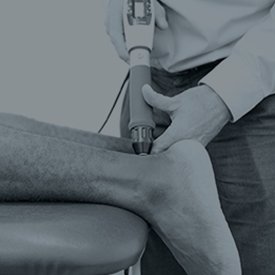
This is sometimes known as its ‘mechanism of action’. Shockwave therapy uses a specialist device to deliver acoustic energy through the skin to the injured part of the body. The shockwaves are mechanical and not electric. They are audible, low-energy sound waves, which increase the blood flow to the injured area.
Shockwave therapy has two main modes of action which will help with persistent tendon pain. First the shockwaves work to desensitise nerve endings which will often give an immediate reduction in pain. Secondly, and often most importantly, the shockwaves cause controlled micro-trauma (microscopic damage) to the tissues which encourages the body to respond by increasing the blood circulation and metabolism in the affected area. This will activate and accelerate the body’s own healing response. The shockwaves can also ‘breakdown’ disorganised tissue and calcifications.
Is there clinical evidence supporting the use of shockwave therapy?
There is a significant body of evidence supporting the use of shockwave therapy in many common conditions. For more information about your specific condition please use the links above.
The use of shockwave therapy for tendon issues is well supported by the National Institute for Health and Care Excellence (NICE). NICE provides national guidance and advice to improve health and social care in both NHS and private practice. It provides evidence based recommendations to guide best practice within healthcare. NICE have produced guidelines for the use of shockwave in the treatment of Achilles tendinopathy, plantarfascitis and calcific tendinopathy.
If you would like to discuss shockwave therapy before booking in please call 020 7482 3875 or email info@complete-physio.co.uk and one of our clinicians will contact you to discuss.
Who should have shockwave therapy?
Shockwave therapy is offered to patients who have had their pain for several months and are not improving with other treatments such as stretches, strengthening exercises, orthotics and activity modification.
Shockwave therapy is designed for stubborn tendon issues that are not improving. Tendons compared to muscles, for example, have a relatively poor blood supply so it is not unusual for them to take several months, even years, for them to improve. Shockwave can speed up this healing process and get patients back on track.
Shockwave is a minimally invasive treatment that is carried out on an outpatient basis in one of our specialist clinics.
Who will carry out the shockwave treatment?
Your shockwave treatment will be carried out by one of our highly specialised physiotherapists. They have received specialist training in shockwave therapy and have extensive experience in treating stubborn, chronic tendon complaints.
Should it be used in conjunction with other treatments?
This depends on what condition is being treated but at Complete Physio, we believe that shockwave therapy compliments physiotherapy and rehabilitation.
Shockwave therapy works most effectively as part of a complete treatment and rehabilitation programme. Any biomechanical issues (such as posture, alignment, gait, running style, muscle length and strength issues) which have led to a problem should still be addressed for the best, long-term results. An exercise programme to complement the effects of shockwave will be prescribed by your treating clinician.
A number of studies have demonstrated its effectiveness in treating tendon problems that have failed other forms of conservative management. Shockwave is now increasingly being used earlier in treatment to facilitate and speed up recovery.
We advise that anti-inflammatory medications such as Ibuprofen and Naproxen, are stopped 48 hours before you commence shockwave treatment and are not used during the entire shockwave treatment period.
How is the treatment delivered and how many sessions do you need?
The number of treatments you require will vary depending on your diagnosis and the duration of your symptoms.
Shockwave treatment has a cumulative effect on the injured tissue. The research shows that patients should have a minimum of three treatment sessions over a period of three weeks. It is not unusual that more than three sessions are required but this is decided on a needs basis depending on your response to treatment.
Shockwave treatment lasts approximately 5-10 minutes. During each session approximately 2500-3000 shocks will be administered to the injured tissue.
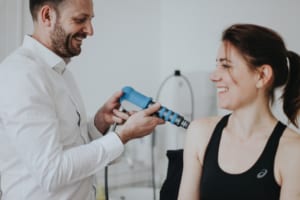
During your shockwave session your physiotherapist will adjust the machine intensity to ensure the injured tissue receives the required energy/dosage. As part of your shockwave session your physiotherapist will also prescribe the correct rehabilitation exercises for your condition to ensure an optimal recovery.
At Complete we believe the combination of shockwave therapy and rehabilitation exercise is key in the management of most upper limb and lower limb tendon complaints.
Is shockwave treatment painful?
Shockwave therapy is designed to create a new healing process in the tissue and so has to deliver a certain amount of energy to the injured area. Essentially, this causes micro-trauma to the tissue and so the treatment is likely to cause some discomfort or pain at the injury site.
The level of discomfort depends on the type of injury, site of the injury and how painful or tender the area is before commencing the treatment. Since the treatment only lasts about five minutes, most patients can tolerate the treatment well.
Your clinician is in control of the intensity of the treatment and will communicate with you throughout your treatment and adjust the intensity accordingly.
What should you expect to feel after shockwave therapy?
After the shockwave session you will be able to move the body part normally. Many of our patients feel a significant reduction in pain following a shockwave treatment. However, normally within 2-4 hours after the session they experience some temporary soreness and tenderness in the area. This rarely lasts more than 24 hours and is a normal reaction to shockwave therapy. In most patients, this will not limit normal daily activities.
How long does it take shockwave therapy to work?
From our own experience and the studies on shockwave therapy, most patients will feel a significant clinical benefit in their pain 6 to 8 weeks after treatment. The studies show that this improvement in pain continues for months and even years after your final shockwave session has finished (Moya, et al 2018).
For some people we have seen benefit much sooner than this, but the response does vary.
At which Complete clinics in London can you have shockwave therapy?
We have three designated shockwave clinics; one on Fulham Road (Chelsea), one in the City of London on Bury Street (next to the Gherkin) and our clinic in Angel.
What are the potential side effects of shockwave therapy?
Shockwave is a non-invasive, safe treatment modality with very few side effects. Your physiotherapist will discuss these with you before carrying out the procedure.
1/ Rare side effects:
- Redness, bruising and tenderness in the treated area
- Temporary damage to the skin
- Temporary increase in pain in the treated area
2/ Very rare side effects:
- Tendon tear or rupture
(Dedes et al, 2018).
Is it safe?
Yes, shockwave therapy is very safe. However, it is essential that you attend a specialist, dedicated clinic where the clinicians have extensive experience of using shockwave therapy in the management of tendon pain.
At Complete our clinicians are some of the most experienced in London in the diagnosis and management of tendon complaints.
Can you exercise after shockwave therapy?
It is recommended that you refrain from any activity that stresses the treated area for 24 hours after a shockwave session, even if you have no pain after treatment. For example, if you have received shockwave for your Achilles tendon pain, we strongly recommended that you do not run for 24 hours after each treatment.
We will also advise that you do not carry out your rehabilitation/physiotherapy exercises for 24 hours following your shockwave treatment. You will be able to walk and drive immediately after the treatment.
Any other specific questions will be answered by your physiotherapist.
Is there anything else you should not do after shockwave treatment?
Following a shockwave treatment your physiotherapist will advise that you do not take any anti-inflammatory medication such as Ibuprofen, as it will potentially lessen the treatment effect. Shockwave stimulates a new healing response i.e. it is a pro-inflammatory treatment and so we do not want to inhibit this process. If you feel any discomfort following treatment, we advise that you avoid activities that aggravate the pain and you can take paracetamol.
Does my health insurance policy e.g. BUPA or AXA cover shockwave therapy?
Yes. Over the past few years with the growing clinical evidence for the effectiveness of shockwave therapy, all the major health insurance companies will pay for you to have at least three shockwave sessions at one of our dedicated sites.
Fees
For self-funding patients treatment costs £120 per body part or £210 for two body parts/bilateral. Clinical research/evidence recommends a minimum of 3 sessions. If you have private medical insurance this treatment may not be covered for your specific condition, please always check with your insurance company or discuss with your treating clinician first.How to book eswt treatment
If you are already undergoing treatment please discuss with your clinician. If you would like to book in for a course of shockwave therapy please contact 020 7482 3875 or email info@complete-physio.co.uk Shockwave therapy is available at our Chelsea, Bury Street and Angel clinics.Shockwave Information and Consent Form
Meet our Clinicians

Chris Myers
Chris is one of the few physiotherapists in the country to also be a fully trained as a musculoskeletal sonographer and uses diagnostic ultrasound to diagnose muscle, ligament, tendon, joint and nerve problems. He has been using diagnostic ultrasound to carry...
Alastair Nowell
Alastair graduated in 2003 from the University of East London, and completed many years working in the NHS as a highly specialised musculoskeletal physiotherapist. Additionally, he developed his Physiotherapy knowledge by completing an MSc in Sports...

Luke Millward
Luke Millward is an experienced senior Physiotherapist, with a First Class Degree in Physiotherapy, post-graduate training in Pilates, Acupuncture and muscle control and is a member of the Chartered Society of Physiotherapy....
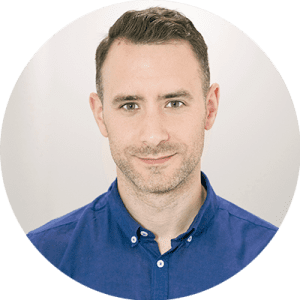
Emerson Fernandez
Emerson has been working as a musculoskeletal sports physiotherapist since completing his BSc (Hons) in 2005, specialising in sports and fitness injuries.Emerson has worked in GP practices, gyms, and accidents...
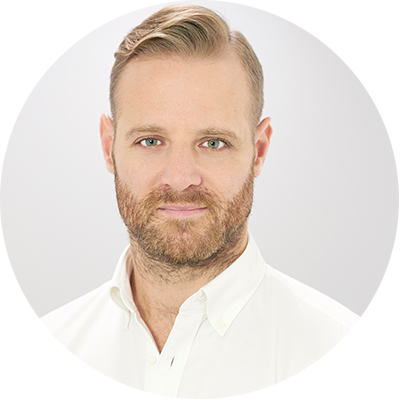
Alexei Roszkowiak
Alexei graduated with a BSc Hons degree in Physiotherapy from the University of East London in 2003. His particular interest in physiotherapy began primarily in Orthopaedics where he initially developed his career working..
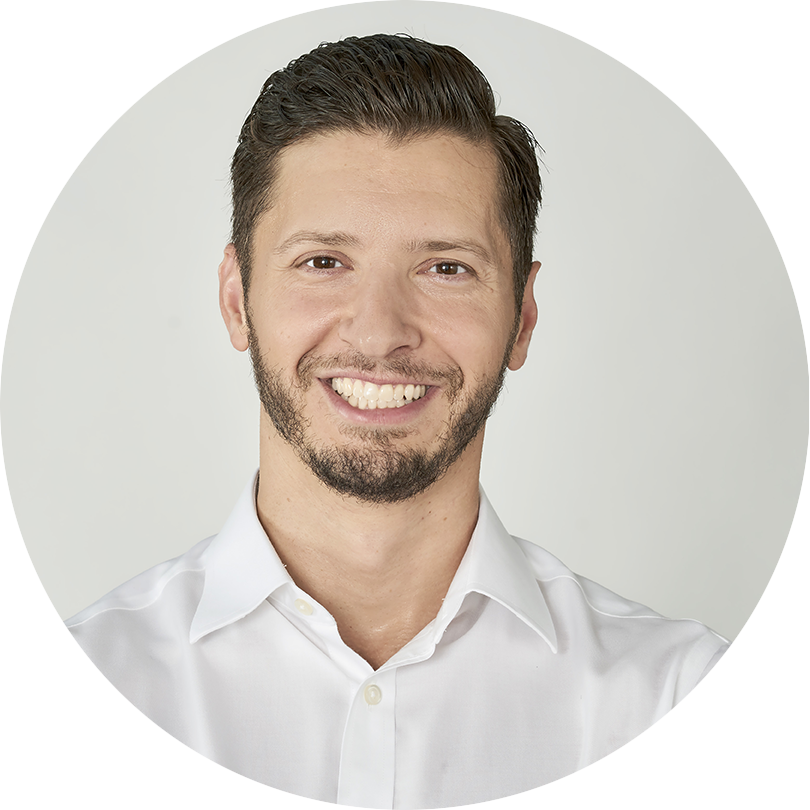
Michael Tegerdine
Michael has gained a vast about of experience in assessing and managing a wide variety of musculo-skeletal conditions whilst working at large teaching hospitals in Essex and London.
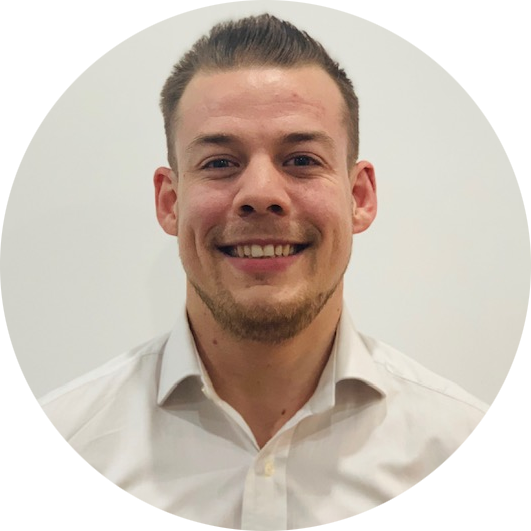
Mike Brent
Mike graduated from the University of Nottingham. After specialising within the NHS he worked for a Professional Rugby club honing his hands on skills and analytical ability....
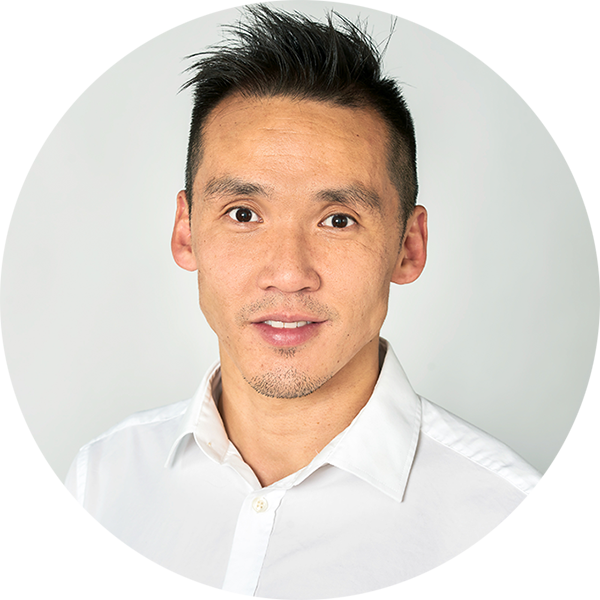
Leo Chiu
Leo qualified with a BSc (Hons) degree from Brunel University in 2003. He worked 10 years in the NHS (the Royal Free and Chelsea and Westminster Hospitals) alongside Orthopaedic Consultants.
Book your appointment
Book online in a couple of minutes, or call the team and we will find the right clinician and clinic for you.