
AC Joint Injuries – From Gym-Related Pain to Traumatic Shoulder Injuries
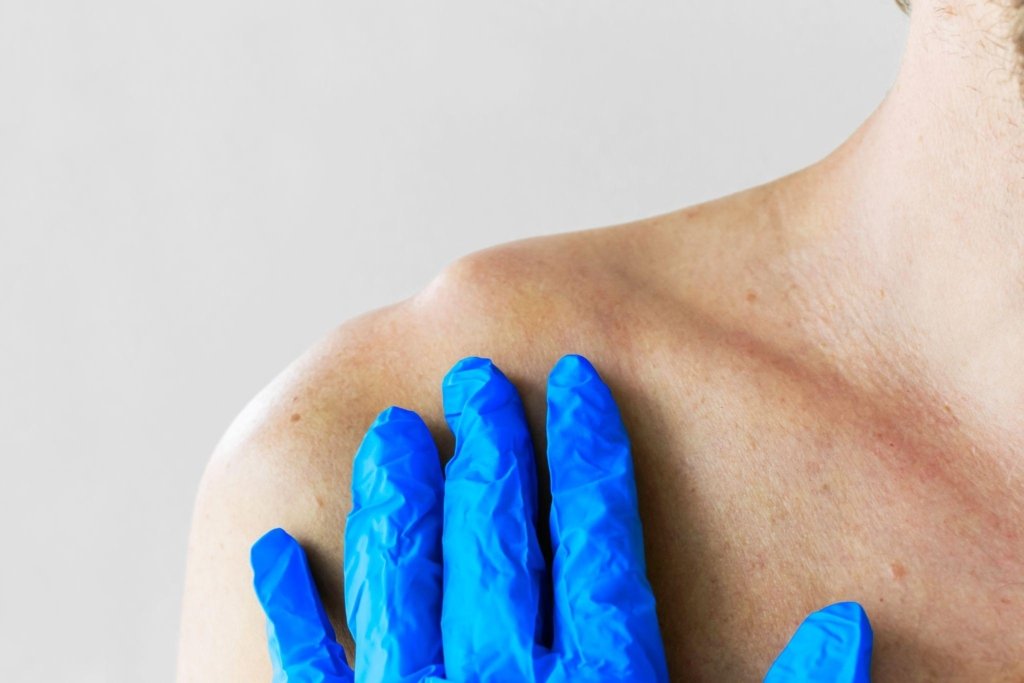
The acromioclavicular joint – usually shortened to the AC joint – is a small joint at the very top of the shoulder, where the collarbone (clavicle) meets the acromion of the shoulder blade.
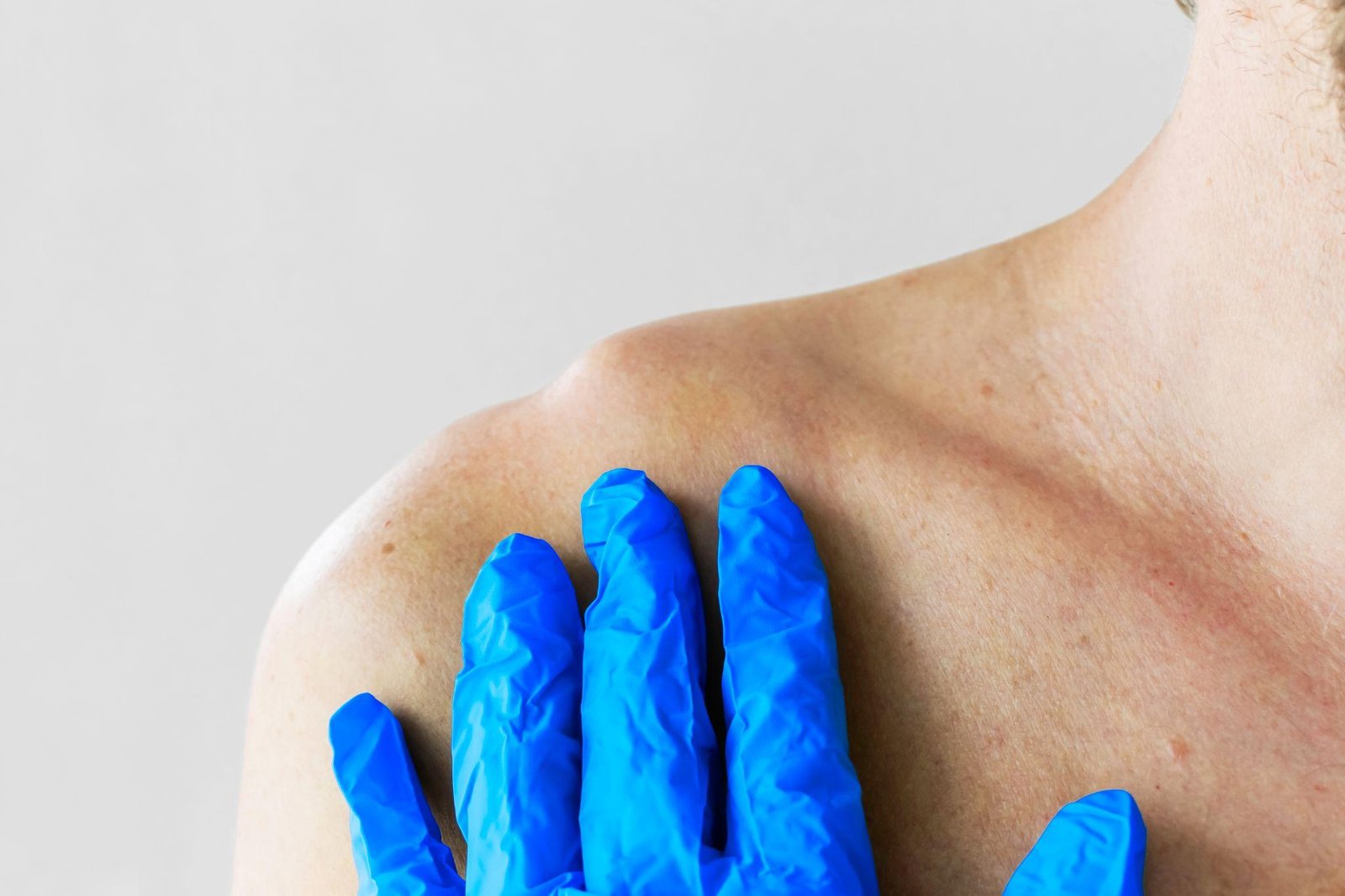
Despite its size, the AC joint can be responsible for a surprising amount of shoulder pain. Problems can develop gradually through repeated loading, particularly in people who regularly train in the gym, or suddenly following an injury such as a fall from a bike or a collision during sport.
In this Complete Physio Podcast, Chris Myers, specialist physiotherapist and clinical director at Complete Physio, talks to Mr Simon Owen Johnstone, consultant upper limb surgeon at London Bridge Orthopaedics, about how AC joint problems present, how they are diagnosed and, importantly, how we decide between rehabilitation, injection therapy and surgery.
Key learning points
- AC joint pain is usually very well localised to the top of the shoulder, at the outer end of the collarbone.
- There are two distinct groups of AC joint problems - atraumatic/overuse AC joint pain and traumatic AC joint injuries.
- Activity modification is one of the most important components of treatment – but this does not necessarily mean stopping all exercise.
- Physiotherapy can help maintain strength and movement, address contributing factors and provide a structured progression back to loading.
- A corticosteroid injection can be useful for persistent inflammatory AC joint pain, particularly when pain is preventing effective rehabilitation.
- An injection should not be viewed as a standalone cure; it works best when combined with appropriate load modification and rehabilitation.
- Lower-grade traumatic AC joint injuries can usually be managed without surgery.
- Grade III injuries require more individualised decision-making based on pain, instability, function and the patient's goals.
What does AC joint pain feel like?
One of the useful things about the AC joint is that patients can often identify the source of their pain remarkably accurately.
Simon describes the typical patient as:
someone who comes into clinic and points with one finger directly to the outer end of their collarbone.
Common symptoms include:
- pain directly over the top of the shoulder
- tenderness when pressing over the AC joint
- pain when reaching across the body
- discomfort with overhead movements
- pain during bench press, shoulder press or other pressing exercises
- pain when lying on the affected side
- pain during or following repetitive upper-body training.
Why does the AC joint become painful without an injury?
Not everyone with AC joint pain remembers injuring their shoulder.
At Complete Physio, we commonly see active patients who have gradually developed pain after increasing their gym training, changing their programme or performing a high volume of pressing or overhead exercises.
Chris explains:
Patients sometimes say they’ve had no injury, so that’s when it might be an overuse injury.
Several different processes can occur within the AC joint.
AC joint inflammation
The AC joint has a capsule surrounding it, and repeated loading can irritate this tissue, producing local inflammation and tenderness.
In more acute cases, the area may be particularly tender and occasionally feel warm or appear slightly swollen.
AC joint disc irritation
There is also a small disc within the AC joint. This can become worn or damaged and may contribute to pain.
Distal clavicle osteolysis
Repeated heavy loading can also produce changes at the end of the collarbone known as distal clavicle osteolysis.
This is particularly associated with weight training and repetitive pressing movements and can be thought of as an overuse-related bony stress response at the end of the clavicle.
Importantly, these different problems can present in a very similar way clinically.
How is AC joint pain diagnosed?
For many patients, diagnosis begins with a good history and clinical examination rather than immediately arranging a scan.
Typical clinical findings include:
- very localised AC joint tenderness
- pain with cross-body adduction
- pain with loading the arm in elevated positions
- reproduction of symptoms during pressing or overhead movements.
As Simon explains:
If the pain is clearly localised to the AC joint and is reproduced with appropriate clinical tests, advanced imaging isn't always necessary in the first instance. Imaging may, however, be useful when symptoms are unusual, the diagnosis is uncertain, there has been significant trauma or symptoms are failing to improve as expected.
Diagnostic ultrasound for an AC joint problem
For some patients, diagnostic musculoskeletal ultrasound can provide useful additional information about the AC joint, particularly when pain has persisted or the diagnosis is unclear.
Ultrasound allows us to assess the joint and surrounding soft tissues in real time and may identify joint swelling, capsular thickening, degenerative changes, bony irregularity and changes affecting the AC joint ligaments.
It can also be used dynamically, assessing the joint during movement to look for abnormal movement or instability.
At Complete Physio, ultrasound can be incorporated into the clinical assessment, allowing the physiotherapist to correlate scan findings with the patient's symptoms, movement and functional testing.
If the AC joint remains painful and inflamed despite appropriate load modification and rehabilitation, ultrasound can also be used to accurately guide a corticosteroid injection into the joint.
Where appropriate, this can help reduce pain and create a window in which rehabilitation and progressive loading can continue.
The first step - modify the load, don't necessarily stop exercising
This is perhaps one of the most important messages from the podcast.
When an AC joint has become irritated through repeated loading, continuing to perform exactly the same exercises at the same intensity is unlikely to allow it to settle.
But that doesn't mean you have to stop training altogether.
Managing acromioclavicular joint pain: tips and tricks!
Chris explains:
You don’t need to stop going to the gym, but you do need to modify for a period of time.
For someone whose symptoms are aggravated by bench press or overhead press, for example, rehabilitation may initially involve reducing or temporarily removing these exercises while maintaining other pain-free training.
The precise modification will depend on the individual.
It might involve changing:
- training frequency
- weight
- repetitions
- range of movement
- pressing technique
- exercise selection
- recovery between sessions.
The aim is to find a level of activity that allows the irritated joint to settle without unnecessarily deconditioning the rest of the shoulder and body.
Recovery can take longer than people expect
One of the common problems we see is that patients rest for a few weeks, feel slightly better and immediately return to their previous training loads.
The pain then returns.
Simon makes an important point:
Anything biological doesn’t take a month - it takes more like three months.
That doesn't mean every patient will be unable to train normally for three months. Rather, it highlights the importance of progressive loading and allowing sufficient time for irritated tissues to recover.
What is the role of physiotherapy for AC joint pain?
Physiotherapy cannot simply "strengthen away" an inflamed AC joint.
This is an important distinction.
If excessive mechanical loading is continually irritating the joint, adding more exercise without addressing that loading may simply aggravate symptoms further.
The first job of the physiotherapist is therefore to understand why the AC joint is being overloaded and how training can be modified while it settles.
Rehabilitation can then be used to:
- maintain shoulder range of movement
- maintain strength while avoiding provocative loading
- identify strength or movement deficits elsewhere in the shoulder complex
- improve exercise and lifting technique where appropriate
- gradually reintroduce pressing and overhead exercise
- guide the patient through progressive loading
- help prevent the classic cycle of feeling better and doing too much too soon.
Taping may also occasionally be useful in a very irritable AC joint to provide short-term offloading.
Can a steroid injection help AC joint pain?
Yes. For the right patient, an AC joint corticosteroid injection can be very effective at reducing pain and inflammation.
The AC joint is superficial and relatively small, making it particularly well suited to an accurately targeted injection.
At Complete Physio, AC joint injections can be performed using ultrasound guidance, allowing the clinician to visualise the joint and accurately position the medication.
However, injection therapy is generally not the first step for a straightforward overuse problem.
As Chris explains:
A steroid injection can be helpful… it would never be a first line of defence though.
Initially, the aim is usually to modify aggravating activities and allow the joint an opportunity to settle.
An injection may become more appropriate when:
- symptoms remain persistent despite appropriate activity modification
- pain is interfering with sleep or daily activities
- symptoms are preventing meaningful rehabilitation
- the diagnosis needs further clarification
- pain repeatedly returns when loading is appropriately reintroduced.
Injection plus rehabilitation
One of the most important messages from the podcast is that an injection should not be regarded as permission to immediately return to heavy training.
In fact, the rapid pain relief following an injection can sometimes create a problem: the shoulder feels good, so the patient immediately returns to their previous bench press or overhead programme.
The underlying loading issue hasn't changed.
This is where combining injection therapy with physiotherapy can be particularly useful.
Chris and Simon are both clear that an injection needs to be combined with physiotherapy and sensible load management.
As Chris puts it:
There’s a role for injections, there’s a role for physio… it’s probably the combination that gives you the best effect.
The injection creates a window in which pain and inflammation are reduced, while rehabilitation addresses loading, strength, movement and technique before progressively returning the patient to their chosen activity.
Repeated steroid injections should not become a long-term strategy for allowing someone to continue aggravating the joint.
When might surgery be considered for persistent AC joint pain?
Only a relatively small proportion of people with atraumatic AC joint pain require surgery.
However, if symptoms remain significant despite prolonged load modification, rehabilitation and appropriate injection treatment, surgical assessment may be considered.
One option discussed in the podcast is AC joint excision arthroplasty, sometimes called distal clavicle excision.
During this procedure, a small section from the end of the clavicle is removed so that the painful joint surfaces no longer repeatedly contact one another.
Simon describes it simply as:
You’re making a gap in the joint.
The operation is usually performed using keyhole surgery.
Simon estimates the procedure to be successful in around 90% of appropriately selected patients in his clinical experience.
Physiotherapy after AC joint surgery
Rehabilitation remains important even when surgery is required.
Following distal clavicle excision, patients can begin gradually using the shoulder and progressively build their exercise tolerance.
Simon suggests that the initial recovery occurs over approximately three months, although returning to previous maximum gym performance may take considerably longer.
His view on postoperative rehabilitation is particularly clear:
Everyone who has a shoulder operation needs physio, you can’t do shoulder surgery without physio.
Traumatic AC joint injuries
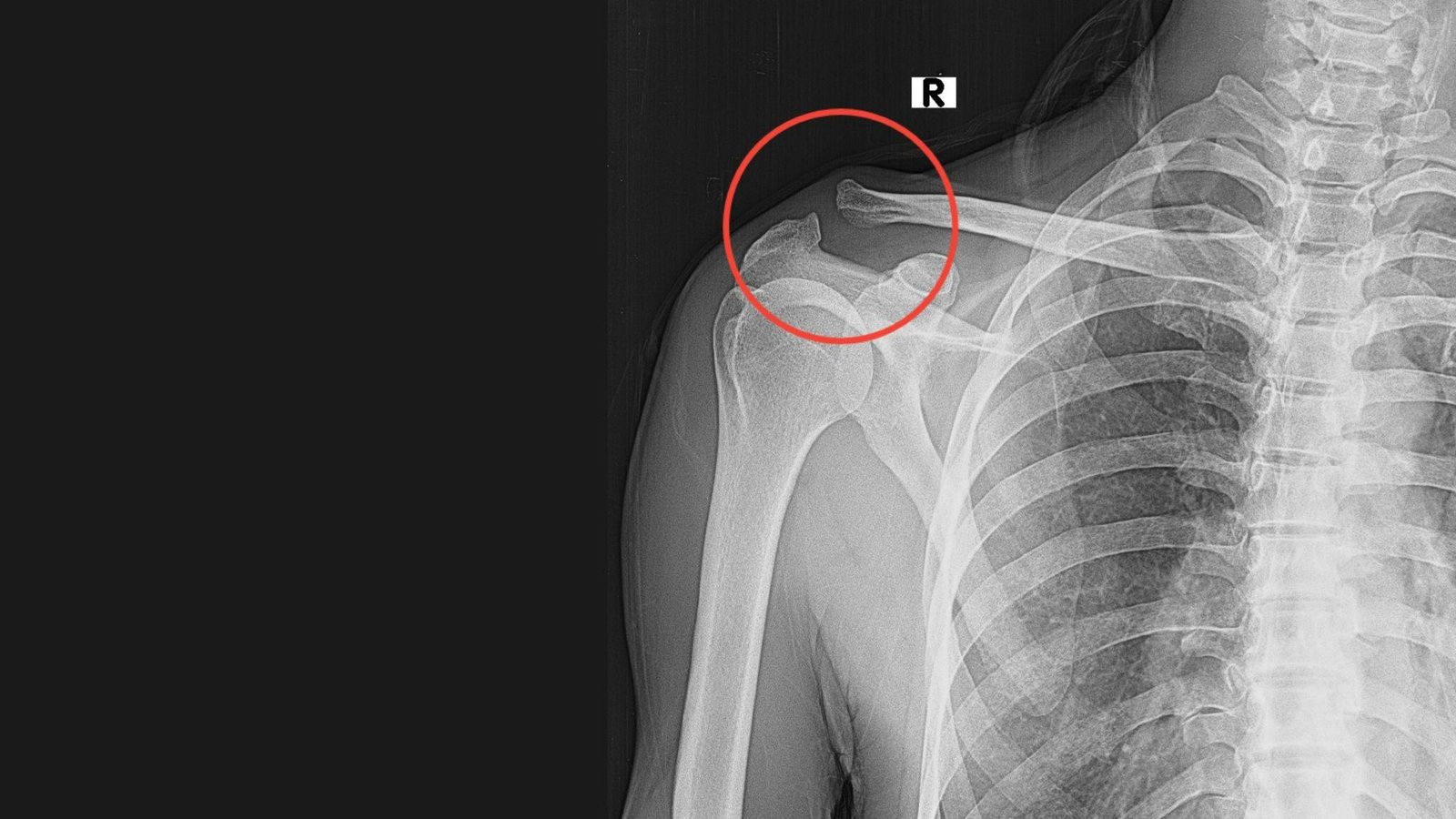
The second major group discussed in the podcast is very different.
Traumatic AC joint injuries usually happen when someone lands directly onto the point of their shoulder.
Typical mechanisms include:
- falling from a bicycle
- rugby tackles
- skiing accidents
- horse-riding falls
- running falls
- contact sports.
The impact can damage the ligaments responsible for maintaining the relationship between the clavicle and shoulder blade.
The result can range from a painful sprain to a very obvious deformity where the end of the collarbone appears to stick upwards.
How are traumatic AC joint injuries graded?
Several grading systems exist, but AC joint injuries are commonly described using the Rockwood classification.
Grade I – AC joint sprain
A Grade I injury is essentially a sprain.
The joint remains anatomically aligned, although it may be extremely painful and swollen.
These injuries are generally treated conservatively with pain relief, appropriate early movement and physiotherapy.
Simon emphasises that:
even apparently minor injuries can take time to heal
Grade II – partial ligament injury
In a Grade II injury, there is greater damage to the AC joint ligaments, but the important coracoclavicular ligaments remain intact.
Again, treatment is usually non-operative.
A sling may initially be used for comfort, followed by progressive physiotherapy and rehabilitation.
Grade III – complete ligament disruption
Grade III injuries are more controversial.
There is disruption of both the AC and coracoclavicular ligaments, allowing the clavicle to become more prominent.
Some patients recover extremely well without surgery.
Others are left with symptoms such as:
- persistent pain
- instability
- clicking or clunking
- an uncomfortable sensation during lifting
- reduced sporting performance
- dissatisfaction with the cosmetic appearance.
As Simon says:
Some are okay (without surgery), some aren’t.
This is why treatment needs to be individualised rather than based on an X-ray alone.
A patient's sport, occupation, symptoms, expectations and feelings about the appearance or stability of their shoulder all matter.
Higher-grade AC joint injuries
Grades IV, V and VI represent progressively more significant displacement and soft-tissue disruption.
These injuries are much more likely to require specialist orthopaedic assessment, and surgery may be recommended depending on the exact injury.
Should a Grade III AC joint injury be operated on?
This is one of the most interesting areas discussed in the podcast because there isn't always a simple answer.
Traditional teaching has generally favoured conservative management for Grade III injuries, while higher-grade injuries are more likely to undergo surgery.
But Grade III injuries vary considerably between patients.
Simon explains that if he personally sustained a Grade III injury:
I wouldn’t have an operation. I’d wait.
The advantage of waiting is that many people will regain excellent function without surgery.
The disadvantage is time. A patient may spend several months rehabilitating the shoulder before deciding that persistent instability or pain is unacceptable. If they subsequently choose surgery, another postoperative rehabilitation period follows.
Shared decision-making is therefore important.
Rehabilitation after a traumatic AC joint injury
For Grade I, II and many Grade III injuries, physiotherapy is central to recovery.
Initially, treatment is about protecting the injured tissues while maintaining as much comfortable movement as possible.
Rehabilitation can then progressively address:
- shoulder range of movement
- scapular control
- rotator cuff strength
- upper-limb strength
- pushing and pulling movements
- overhead control
- sport-specific loading
- confidence using the shoulder.
Return to sport or heavy gym training should be progressive rather than simply based on pain disappearing.
This becomes even more important following surgical reconstruction.
After AC joint stabilisation surgery, Simon advises:
Patients should avoid loads greater than approximately 5 kg for the first three months while healing occurs
This can be particularly challenging for active patients who may feel surprisingly good only a few weeks after surgery.
Chris highlights one of the physiotherapist's most important jobs at this stage:
Sometimes you’re having to slow them down a little bit because it feels good two or three weeks in.
Feeling better does not necessarily mean the healing tissues are ready for heavy loading.
FAQs
1. Can an AC joint injury heal without surgery?
Yes. Most lower-grade AC joint injuries can be successfully managed without surgery. Grade I and II injuries are usually treated with activity modification, pain management and physiotherapy, while many Grade III injuries can also recover well with conservative treatment.
Research comparing surgery with non-surgical management for Grade III injuries has found similar long-term functional outcomes overall, although treatment should be individualised.
2. How long does an AC joint injury take to heal?
Recovery depends on the severity of the injury and the activities you want to return to. A mild AC joint sprain may improve considerably within several weeks, but complete recovery of strength, confidence and tolerance to heavier loading can take considerably longer.
For more significant injuries, rehabilitation may continue for around three months or more. Return to sport should generally be based on symptoms, movement and strength rather than time alone.
3. Is physiotherapy good for an AC joint injury?
Physiotherapy is an important part of managing many AC joint injuries, but rehabilitation needs to be appropriate to the stage of recovery. Initially, the priority may be reducing provocative loading while maintaining comfortable movement.
Rehabilitation can then progressively restore shoulder and scapular strength, movement and tolerance to pushing, pulling and overhead activities. Following AC joint surgery, physiotherapy is also important for guiding a safe return to normal activity and sport.
4. Can a steroid injection help AC joint pain?
A corticosteroid injection may be considered when AC joint pain remains persistent despite appropriate activity modification and rehabilitation. The aim is to reduce pain and inflammation sufficiently to allow normal movement and rehabilitation to progress.
However, an injection should generally be considered part of an overall treatment programme rather than a standalone solution. In particular, returning immediately to the activity that irritated the joint may cause symptoms to recur.
5. Can I still go to the gym with AC joint pain?
Often, yes. Having AC joint pain does not necessarily mean stopping all exercise. The key is identifying and temporarily modifying the movements that provoke the joint.
Bench press, dips and heavy or repetitive overhead pressing can be particularly provocative.
A physiotherapist can help modify your programme while maintaining strength and fitness, before progressively reintroducing the movements that caused symptoms.
6. When does an AC joint injury need surgery?
Surgery is more commonly considered for higher-grade traumatic AC joint injuries or when persistent pain, instability or loss of function remains despite appropriate conservative treatment.
Grade III injuries are particularly individual: many patients recover successfully without surgery, while others experience ongoing instability, clunking, pain or difficulty returning to sport.
Current evidence supports making the decision according to the patient's symptoms, functional requirements and goals rather than the X-ray appearance alone.
References
de Groot, C., Verstift, D.E., Heisen, J., van Deurzen, D.F. and van den Bekerom, M.P., (2023). Management of acromioclavicular injuries–current concepts. Orthopedic research and reviews, pp.1-12.
Gorbaty, J.D., Hsu, J.E. and Gee, A.O., 2017. Classifications in brief: Rockwood classification of acromioclavicular joint separations. Clinical Orthopaedics and Related Research®, 475(1), pp.283-287.
Lameire, D.L. et al. (2026). Outcomes after operative versus nonoperative management of Type III to V acromioclavicular joint dislocations: a systematic review and meta-analysis of randomized controlled trials. Orthopaedic Journal of Sports Medicine, 14(7).
Olsen, B. and Gregory, B. (2023). Diagnosis and nonoperative treatment of acromioclavicular joint injuries in athletes and guide for return to play. Clinics in Sports Medicine, 42(4), pp.573–587.
Simovitch, R., Sanders, B., Ozbaydar, M., Lavery, K. and Warner, J.J.P. (2009). Acromioclavicular joint injuries: diagnosis and management. Journal of the American Academy of Orthopaedic Surgeons, 17(4), pp.207–219.